

Uk Club casino Plinko game
Introduction
When I assess fast-format real money games guide for Uk Club Casino players, I usually separate visual simplicity from actual playing behaviour. That distinction matters a lot with Uk club casino Plinko. At first glance, Plinko looks almost too straightforward to deserve a deep review: you drop a ball from the top of a pegboard, it bounces left and right, and it lands in a slot with a multiplier. That is the whole premise. Yet in practice, this format creates a very specific kind of tension that many classic online slots do not reproduce in the same way.
On Uk club casino, Plinko stands out because it strips gambling down to timing, variance, and visible randomness. There are no reels, no paylines, no bonus checklist maps, and no long feature explanations. What the player gets instead is immediate feedback. You choose the stake, select a risk level, often adjust the number of rows, and watch the result unfold in a few seconds. That directness is exactly why the game attracts attention in the United Kingdom market and beyond.
What makes Plinko worth analysing is not its appearance, but its behaviour over a session. It can feel calm for ten rounds, then suddenly produce a sharp swing. It can look transparent while still being mathematically unforgiving. It can also be engaging for players who find slots too cluttered, but disappointing for those who expect layered bonus content. In this review, I will focus on what Uk club casino Plinko actually offers, how its mechanics work in real play, where the pressure points are, and what a player should understand before pressing the first drop. Those comparing loyalty perks can weigh this section against Uk Club Casino live casino games page.
What Plinko is and why it draws so much attention
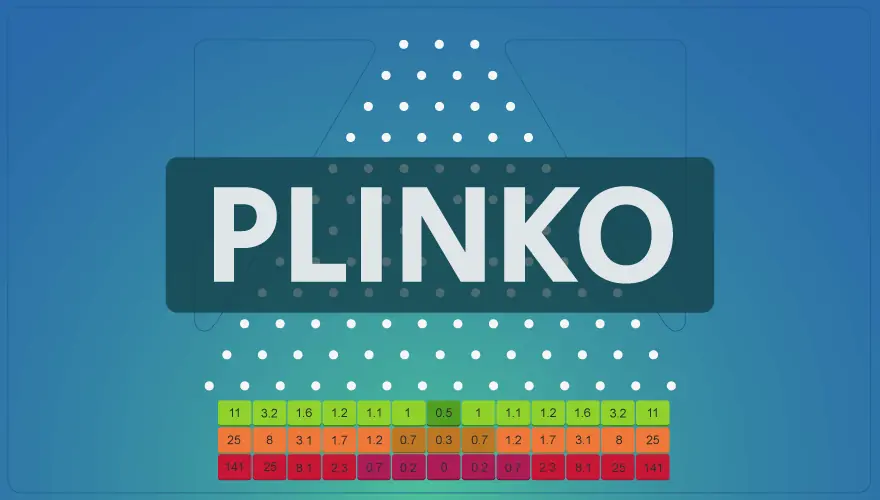
Plinko is a probability-based casino game built around a falling ball and a grid of pegs. The ball is released from the top of the board and changes direction each time it hits a peg. After a sequence of deflections, it lands in one of several slots at the bottom. Each slot carries a multiplier, and that multiplier determines the return on the stake.
The appeal is easy to understand. The rules can be grasped in seconds, but the emotional response is stronger than the rule set suggests. Players do not just receive a result; they watch uncertainty unfold step by step. That visual journey matters. In a slot, the result is often resolved by the spin itself, and the animation is a presentation layer. In Plinko, the path feels like the event. Even though the outcome is still governed by the game’s underlying mathematics and randomisation, the movement creates the sense that every bounce could change everything.
This is one of the most memorable things about Plinko: it looks like a toy, but it behaves like a high-variance betting model. That contrast is a major reason for its visibility. Casual players approach it because it seems accessible. More experienced players stay interested because risk settings and board structure can produce very different session profiles.
Another reason for its rise is pace. A player can complete many rounds quickly without having to navigate symbols, side features, or complex paytables. That makes Plinko highly watchable, highly repeatable, and easy to understand in streams or short social clips. But visibility should not be confused with softness. A simple interface does not mean a gentle bankroll experience.
How the Plinko system works in practical terms
To understand Uk club casino Plinko, it helps to ignore the decorative layer and focus on the operating model. The player generally controls three core variables: stake size, risk level, and board depth, usually expressed as the number of rows. Once those parameters are set, the ball is dropped and the round resolves when it reaches a multiplier slot at the bottom.
The pegboard creates a branching path. Each collision sends the ball left or right, building a distribution pattern across the lower slots. In broad terms, central slots tend to appear more often, while edge slots are rarer. That is why the most extreme multipliers are usually placed near the edges. The board is not rewarding drama equally across all outcomes; it is structured so that the eye is drawn to rare events while the session is mostly built from modest returns or low multipliers.
Here is the practical logic behind the format:
- You choose the session profile. Lower risk settings usually compress the multiplier range. High risk settings widen it.
- You watch a visible random path. The ball’s route gives the round its suspense and identity.
- The bottom slot determines the result. That multiplier is applied to the stake.
- The board shape influences feel. More rows generally mean a longer path and often a wider spread of possible outcomes.
What matters for the player is that these settings are not cosmetic. They change the character of the session. A lower-risk setup often produces steadier, less dramatic returns, while a higher-risk setup can generate long dry stretches punctuated by rare spikes. The same game can therefore feel either controlled or brutal depending on configuration.
| Element | What it changes | What it means in play |
|---|---|---|
| Stake | Base value of each drop | Directly affects bankroll speed and exposure per round |
| Risk level | Distribution of multipliers | Higher settings usually mean larger swings and rarer top outcomes |
| Rows | Path length and board spread | Can alter pacing, visual suspense, and the shape of possible returns |
| Auto mode | Round repetition speed | Convenient, but can make losses accumulate faster than expected |
One observation I keep returning to with Plinko is this: the game feels transparent because you can see the ball move, but the mathematical edge is no less real just because the randomness is visible. That is an important distinction for anyone who mistakes visual clarity for strategic control.
Why the game feels engaging and how the session rhythm develops
Plinko creates engagement through anticipation rather than through narrative. There are no expanding wilds, free spins, or level progression in the slot sense. The tension comes from the short delay between decision and outcome. Once the ball is released, there is just enough time for the player to project an ideal landing zone, reconsider it, and react emotionally to every bounce.
That rhythm is one of the format’s strongest assets. The rounds are short, but not instant. They are visual, but not overloaded. They repeat easily, but they do not feel identical because the path changes every time. This gives Uk club casino Plinko a clean loop: choose, drop, watch, react, repeat.
In practical play, the tempo can shift quickly depending on settings. On conservative risk, the session often feels smoother and less dramatic. Returns may be smaller, but the ride is easier to follow. On aggressive risk, the same game becomes more emotionally uneven. You may see many disappointing landings before one result changes the balance of the session. For some players, that chase element is the entire point. For others, it becomes tiring very quickly.
A useful way to think about Plinko is that it compresses gambling psychology into a compact cycle. The round is short enough to encourage repetition, but long enough to build suspense. That combination can be effective, and it can also be dangerous for players who tend to increase stakes impulsively after a string of weak outcomes.
A player may assume that watching each ball fall naturally slows the experience down. Another detail worth noting: Plinko often feels faster than it looks on paper. In reality, because decision-making is so minimal, rounds can stack rapidly, especially in auto-play or when the interface is highly responsive.
Risk profile, variance and who should approach with caution
If I had to summarise Plinko’s risk profile in one line, I would say this: it is simple to start, but not always simple to absorb financially. The game can be configured in ways that make it relatively mild, yet its identity is closely tied to uneven outcome distribution. That means a player should not judge it by appearance alone.
Most versions of Plinko include low, medium, and high risk settings. These options usually affect how the multiplier map is weighted. Lower settings tend to reduce the gap between common and rare outcomes. Higher settings expand that gap. The result is a session where modest or losing results may dominate for long stretches while the largest multipliers remain uncommon by design. Players who value quick withdrawals will find real timings in check Uk Club Casino Aviator crash game before registering or depositing.
For players in the United Kingdom who are used to slots, the main adjustment is psychological. In slots, variance is often wrapped inside features, symbols, and event sequences. In Plinko, the same tension is exposed more directly. There is nowhere for the volatility to hide. You either hit a useful multiplier or you do not.
That directness makes the game suitable for some profiles and unsuitable for others:
- It can suit players who like quick rounds and visible outcomes. If you enjoy immediate resolution and clean interfaces, Plinko makes sense.
- It can suit players who understand bankroll discipline. The format rewards restraint more than many newcomers expect.
- It may not suit feature-driven slot fans. If you want story, progression, or layered bonus design, Plinko can feel too bare.
- It may not suit players who chase losses. The fast loop and high-risk settings can punish emotional betting.
There is also a common misconception that Plinko is “fairer” because the trajectory is visible. I do not think that is the right way to frame it. It is more legible, yes. You can watch the route unfold. But legibility is not the same thing as favourable expectation. The house edge still exists, and the rare top multipliers are rare for a reason.
What players need to understand about probability and possible outcomes
Probability in Plinko is easier to grasp visually than in many casino formats, but that does not automatically make it intuitive. The board naturally channels many results toward the centre and fewer toward the edges. Since the edge slots often carry the largest multipliers, the most exciting outcomes are also among the least frequent. This is not a flaw in the design; it is the design.
For the player, the practical lesson is clear: do not build expectations around highlight results. Build expectations around distribution. Most sessions are shaped by ordinary landings, not exceptional ones. If you enter Plinko expecting a steady stream of large returns, the game will feel harsh. If you approach it as a variance-led format where occasional spikes define the upside, the experience becomes easier to read.
It is also worth remembering that short sessions can be misleading. A player may hit a strong multiplier early and conclude that the setup is generous. Another may miss repeatedly and assume the board is cold. Neither interpretation tells you much by itself. Plinko can produce clusters, droughts, and abrupt reversals simply because variance is doing its normal work over a small sample.
| Player assumption | What actually matters |
|---|---|
| “The ball almost reached the top multiplier, so I was close.” | The final slot is all that counts; near-misses are emotionally powerful but not strategically meaningful. |
| “Low risk means safe profits.” | Lower risk may soften swings, but it does not remove the house edge or guarantee positive sessions. |
| “High risk is better because the ceiling is bigger.” | A larger ceiling usually comes with longer losing stretches and a lower hit comfort level. |
| “I can read patterns from recent drops.” | Past results do not create a reliable prediction model for future drops. |
One of the most useful habits before real-money play is to spend time in demo mode if it is available through Uk club casino or a related test environment. Not because demo results reveal a hidden trick, but because they help you feel the pace, understand the board, and see how your chosen risk level behaves over a sequence of rounds.
How Plinko differs from slots and other casino favourites
Plinko sits in an unusual position among online casino games. It is not a classic slot, not a table game, and not quite a Uk Club Casino crash games review either, though some players who enjoy crash-style tension are often drawn to it. Its identity comes from visible path-based resolution rather than reel combinations or dealer-driven rules.
Compared with slots, the biggest differences are structural:
First, there is no symbol language to learn. Slots rely on combinations, paytables, special icons, and feature triggers. Plinko replaces all of that with a multiplier board. This makes onboarding much faster, but it also removes the layered sense of discovery that some slot players enjoy.
Second, the emotional payoff is concentrated into a single movement. In a slot, anticipation can come from scatter counts, reel stops, and feature entry. In Plinko, anticipation is contained in the ball’s descent. That makes the game cleaner, but also more repetitive if the player needs variety.
Third, control feels different. In slots, players usually control bet size and perhaps volatility by choosing a different title. In Plinko, risk level and rows often let the player reshape the same format directly. This gives a stronger sense of session customisation, even though the underlying expectation remains in the casino’s favour.
Against roulette, Plinko is less about discrete betting layouts and more about animated probability. Against best blackjack information for Uk Club Casino players, it offers almost no strategic depth in the traditional sense. Against live casino products, it is far less social and far more self-contained. That is why I see Plinko as a specialist format: excellent for players who want concentrated suspense without rule complexity, but less compelling for those who value tactical decisions or feature variety.
Real strengths and practical limitations of Uk club casino Plinko
Every good review should separate what a game does well from what it merely appears to do well. In the case of Uk club casino Plinko, the strengths are real, but so are the limitations.
Where the game performs well:
- Immediate clarity. New players can understand the format in moments.
- Strong visual suspense. The ball path creates genuine moment-to-moment tension.
- Flexible session style. Risk settings and row options can noticeably change the feel of play.
- Fast repetition. Ideal for players who prefer short rounds over long feature cycles.
Where the game shows its limits:
- Limited depth. Once the format is understood, there are fewer layers to explore than in many slots.
- Potential for bankroll acceleration. Because rounds are quick, losses can accumulate quietly.
- Heavy dependence on variance. High-risk setups can become frustrating if expectations are unrealistic.
- Reduced appeal for narrative players. Those who enjoy themes, bonus rounds, and progression may lose interest.
The most interesting tension here is that Plinko can feel both transparent and deceptive in different ways. Transparent, because the interface is honest about what is happening. Deceptive, because that honesty can make players underestimate how sharp the swings may become. A clean board does not mean a gentle session.
If I compare it with many modern slot releases, I would say Plinko wins on immediacy and loses on long-form variety. It is excellent at delivering a concentrated burst of uncertainty. It is less effective if you want a game that evolves over time or rewards prolonged exploration.
What to check before launching a real-money Plinko session
Before starting Uk club casino Plinko, I would advise any player to pause for a minute and check a few practical points. This is where small decisions shape the entire experience.
Start with the risk setting. Do not treat “high risk” as the default just because the top multipliers look attractive. In many cases, that choice changes the emotional profile of the session far more than beginners expect. If your goal is to understand the board and keep the session readable, a lower or medium setting is often the better starting point.
Then look at the stake in relation to speed. Plinko is one of those formats where a modest stake can still produce a very active session simply because rounds resolve quickly. If auto-play is available, be especially careful. Automation is convenient, but it removes the natural pause that sometimes prevents poor decisions.
It also helps to define the purpose of the session. Are you testing the format? Looking for short bursts of action? Exploring higher variance knowingly? The answer matters. Plinko tends to work best when the player enters with a clear expectation. It works less well when used as an emotional recovery tool after losses elsewhere.
Here are the checks I consider most useful before launch:
- Choose a risk level that matches your tolerance, not your fantasy result.
- Set a stake that still feels comfortable if several weak outcomes arrive in a row.
- Use demo play first if you have never tried this format before.
- Avoid increasing bet size just because a big multiplier recently appeared or nearly appeared.
- Decide in advance how long the session should last.
If the platform occasionally uses the alternate spelling Ukclub casino, the underlying point remains the same: the value of this page is not in the brand label, but in understanding what the Plinko format is actually asking from the player. It asks for comfort with randomness, patience during flat stretches, and enough discipline to keep pace from turning into overexposure.
Final verdict on Uk club casino Plinko
Uk club casino Plinko offers a very specific kind of casino experience. It is not trying to compete with slots on theme depth or with table games on strategic input. Its strength lies elsewhere: a simple setup, visible suspense, adjustable risk, and a session rhythm that is easy to enter but not always easy to manage.
What I think the game genuinely does well is make probability feel tangible. You are not just waiting for a result behind spinning reels; you are watching uncertainty move in front of you. That gives Plinko a distinct identity and explains why so many players notice it quickly. The strongest parts of the format are clarity, pace, and the ability to tune the session style through risk and board settings.
Where caution is needed is equally clear. The game can produce sharp swings, especially on aggressive settings. Its visual simplicity may tempt players to underestimate variance. Its fast loop can also make bankroll drain less obvious until several rounds have passed. For players who need feature depth, evolving gameplay, or a stronger sense of progression, Plinko may feel too narrow after the initial appeal wears off.
So, is it worth trying? In my view, yes, if you want a direct, fast, probability-led format and you understand that the clean interface does not reduce the underlying uncertainty. Plinko can suit players who value quick decisions and visible outcomes. It may not suit those who prefer elaborate slots or games with more tactical control. That is the real answer. Plinko is not universally appealing, but for the right player, it delivers exactly what it promises: concentrated suspense in a stripped-down format where every drop matters.
FAQ
How does Plinko with ball drops work in the game?
A ball drops from the top and bounces off pegs, then lands in a numbered payout area. The multiplier of the landing zone determines the result for that round.
What should be checked before starting real-money Plinko play?
Confirm the stake shown for the next round and review the risk level displayed with the game. If a demo mode toggle is available, select the correct mode before placing a bet.
Can the Plinko demo mode be used to test the mechanics before real-money play?
Yes, demo mode is designed for practice without real-money wagering. It helps players understand how ball trajectories and multipliers behave on different sessions, without affecting account balances.
Does Plinko on Uk Club use multipliers, and what do they mean?
Plinko rounds typically show a multiplier tied to the landing result. The higher the multiplier zone the ball reaches, the bigger the round outcome relative to the stake.
Ready to start: should Plinko be opened in demo or real-money mode first?
Start in demo mode if the mechanics and risk level are unfamiliar, then switch to real-money play only when the stake and mode are confirmed.